
Otto Lehmann · 24 September 2026
Axle Stress Patterns Observed in Long-Haul Trucks Navigating Remote Mountain Passes During Extended Freeze-Thaw Cycles
Remote mountain passes present unique challenges for long-haul trucking fleets when extended freeze-thaw cycles alter road surfaces and load dynamics. These cycles occur when temperatures fluctuate around the freezing point, causing repeated expansion and contraction of moisture in pavement and subgrade materials. Researchers have documented how such conditions generate variable stress concentrations along truck axles, particularly in regions like the Rocky Mountains and similar high-altitude corridors where winter persists for months.
Mechanisms Driving Axle Stress Variations
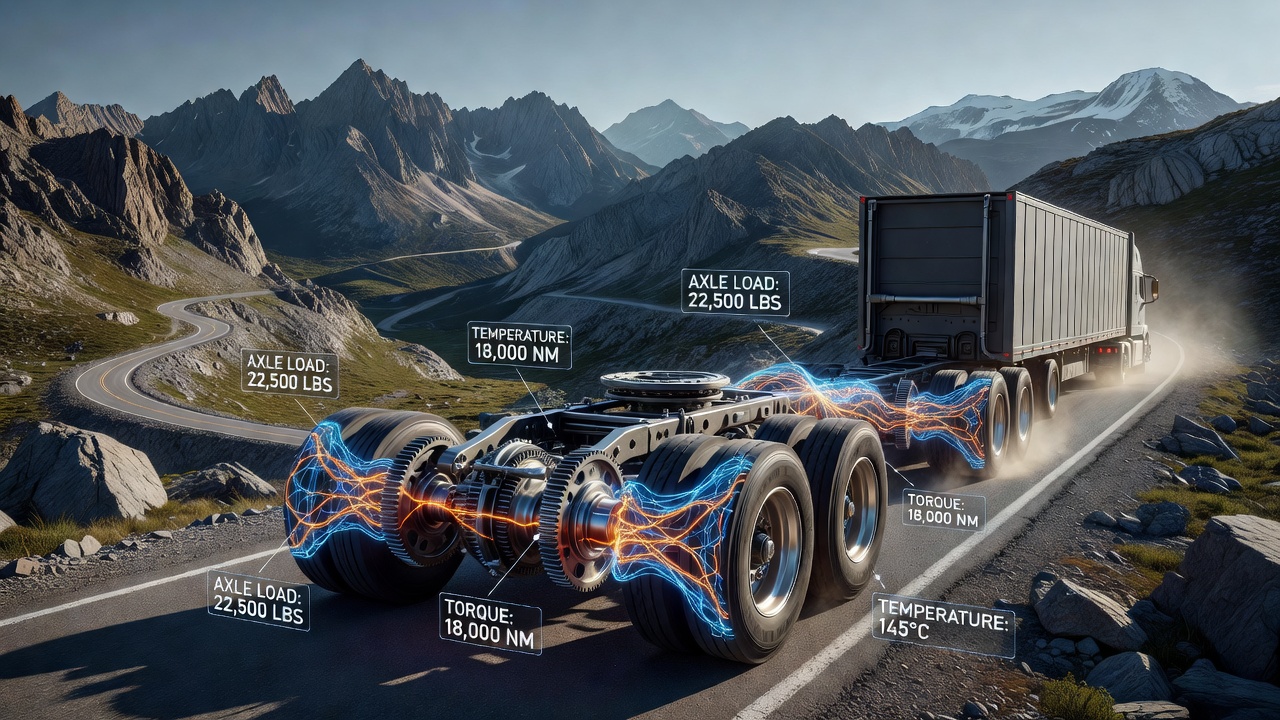
Freeze-thaw activity begins with water infiltration into cracks and pores in asphalt or concrete, followed by expansion upon freezing that lifts and distorts the surface layer. Subsequent thawing allows the material to settle unevenly, which creates ruts, dips, and heaves that trucks encounter at speed. Observers note that these surface irregularities transmit vertical and torsional forces directly to axle assemblies, with the magnitude depending on vehicle weight, speed, and tire pressure. Data from monitoring stations show peak stresses often align with moments when a truck transitions from a heaved section to a thawed depression, forcing the suspension to absorb sudden load shifts.
Studies conducted across multiple passes indicate that tandem and tridem axle configurations experience distinct stress distributions compared to single axles. The front axle typically encounters initial impact forces, while rear axles contend with residual vibrations that propagate through the chassis. Engineers have recorded instances where differential thawing beneath wheel tracks leads to one side of an axle bearing disproportionate weight, increasing bending moments and fatigue accumulation over repeated passes.
Observations from Field Monitoring Programs
Instrumentation installed on select long-haul routes has captured real-time strain measurements during successive freeze-thaw events. These programs track parameters including axle deflection, temperature gradients within pavement layers, and vehicle speed profiles. Figures compiled through September 2026 reveal elevated stress cycles during periods when daytime highs exceed 0°C while nighttime lows remain below -5°C for consecutive weeks. Such patterns produce more frequent surface disruptions than steady-state cold conditions, as documented in transportation agency reports.
What's interesting is how load distribution changes as trucks descend grades where ice melt pools in low spots. Trucks must brake and accelerate through these zones, adding longitudinal forces that compound the vertical stresses already induced by uneven pavement. Research teams have measured corresponding increases in axle housing torsion and spindle fatigue under these combined loads.
Influencing Factors and Regional Data Sources
Several variables interact to shape observed stress patterns. Vehicle configuration plays a central role, with heavier gross vehicle weights correlating to higher strain amplitudes during surface transitions. Tire type and inflation levels further modulate contact patch behavior on irregular surfaces, while driver practices such as gear selection and braking points influence how quickly loads shift. Environmental factors including solar exposure on south-facing slopes versus shaded north faces create localized differences in thaw rates along the same pass.
According to information from the Federal Highway Administration, long-term pavement performance studies have identified mountain corridors as priority areas for stress-related maintenance because of accelerated deterioration linked to freeze-thaw frequency. Complementary findings from Transport Canada monitoring programs highlight similar axle loading challenges in the Canadian Rockies, where extended winter seasons amplify the number of cycles per year.
Maintenance and Monitoring Approaches
Transportation departments have responded by deploying weigh-in-motion sensors and embedded strain gauges at strategic locations along high-traffic mountain routes. These systems provide continuous data streams that help identify emerging stress hotspots before visible pavement damage appears. Maintenance crews use the information to schedule targeted repairs during brief thaw windows when equipment access improves. In some corridors, crews apply specialized sealants or geogrid reinforcements to reduce moisture ingress and limit heave potential.
Trucking operators have adopted complementary strategies, including route planning software that factors in current temperature forecasts and historical stress data. Some fleets adjust axle loads or suspension settings seasonally to better accommodate anticipated surface conditions. These adjustments reduce the rate of component wear while maintaining schedule reliability.
Conclusion
Extended freeze-thaw cycles continue to generate measurable and repeatable axle stress patterns on long-haul trucks operating through remote mountain passes. Field data gathered through September 2026 confirm that surface distortions from these cycles create concentrated loading events that accumulate over time. Ongoing instrumentation programs and coordinated maintenance efforts provide practical means to track and mitigate the resulting mechanical demands on vehicle components.