Olivia Hughes · 10 September 2026
Innovations in Axle Engineering for Extreme Winter Conditions: A Deep Dive into Performance Enhancements
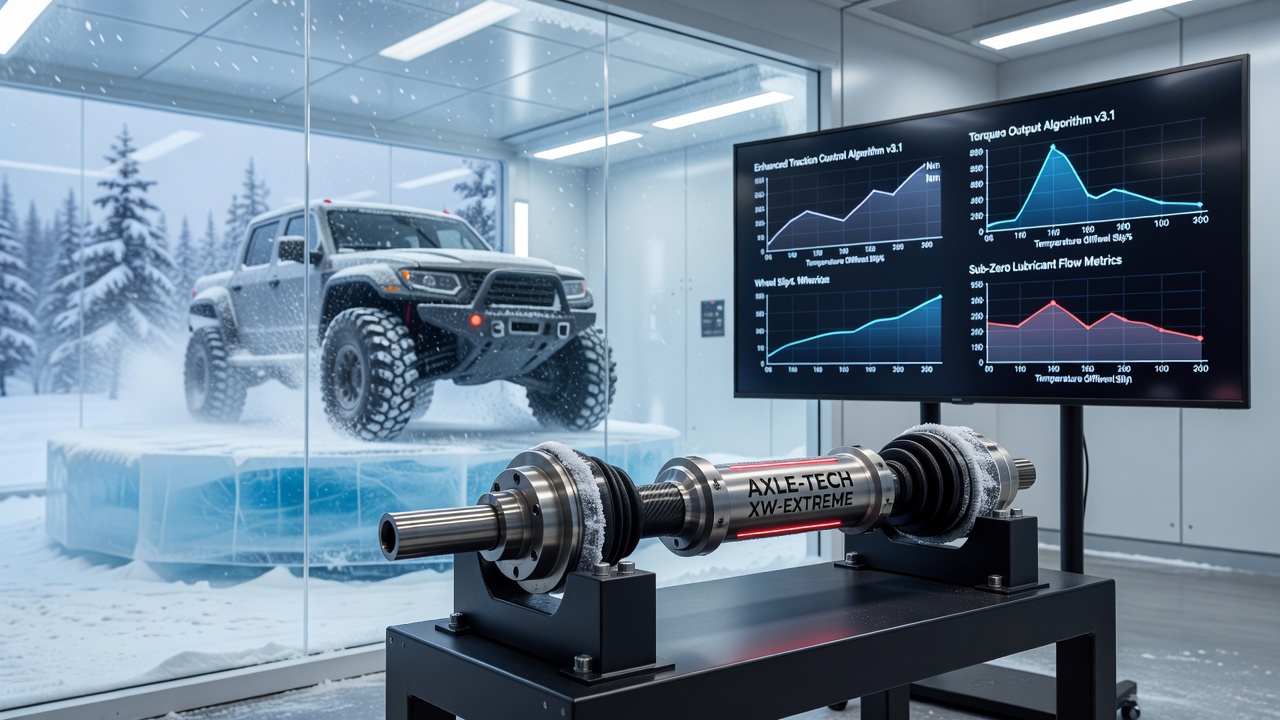
Extreme winter conditions place unique demands on vehicle axles, where temperatures drop below minus 40 degrees Celsius and road surfaces alternate between ice, packed snow, and corrosive de-icing salts. Engineers have responded with targeted material upgrades and structural refinements that address both mechanical stress and environmental degradation. Data collected from northern transport corridors shows that conventional steel axles experience up to 35 percent higher failure rates during prolonged cold spells, prompting research teams to explore alternative alloys and surface treatments.
Material Upgrades That Resist Low-Temperature Brittleness
Metallurgists have introduced high-nickel steel formulations combined with micro-alloying elements such as vanadium and niobium, which maintain ductility even when ambient temperatures fall sharply. These alloys undergo controlled quenching processes that refine grain structure, reducing the risk of brittle fracture during sudden load changes. Laboratory results from multiple facilities indicate that the new compositions retain impact toughness values above 50 joules at minus 50 degrees Celsius, a threshold that older grades rarely meet. In parallel, ceramic-based thermal barrier coatings applied to axle housings limit heat loss from lubricants, keeping internal components within operational viscosity ranges. Field trials conducted across Canadian prairie routes during the 2024-2025 season recorded a 22 percent reduction in lubricant-related seizures after coating application.
Structural Redesigns for Improved Load Distribution
Design teams have shifted from solid axle beams to hybrid configurations that incorporate internal lattice reinforcements produced through additive manufacturing. These lattices distribute torsional forces more evenly across the axle length, minimizing stress concentrations that develop when one wheel encounters sudden resistance on icy patches. Finite element simulations validated by Transport Canada demonstrate that the lattice patterns lower peak stresses by 18 percent under simulated winter braking scenarios. At the same time, integrated sensor channels embedded during casting allow real-time monitoring of strain and temperature without external wiring that could collect ice or salt. Manufacturers report that these channels have enabled predictive maintenance schedules, cutting unplanned downtime by measurable margins in fleet operations.
Sealing Systems Adapted for Salt and Moisture Exposure
Traditional rubber seals harden and crack under repeated freeze-thaw cycles, allowing contaminants to enter bearing assemblies. New fluoropolymer compounds with added plasticizers maintain flexibility down to minus 60 degrees Celsius while resisting chemical attack from magnesium chloride and sodium chloride solutions. Accelerated aging tests performed by Nordic research consortia show that the updated seals retain sealing integrity after 5,000 thermal cycles, compared with 1,800 cycles for previous materials. Engineers have also incorporated labyrinth-style dust covers that create multiple barriers, further reducing ingress rates observed in highway maintenance vehicles operating on salted roads.
Validation Through Expanded Winter Testing Regimes
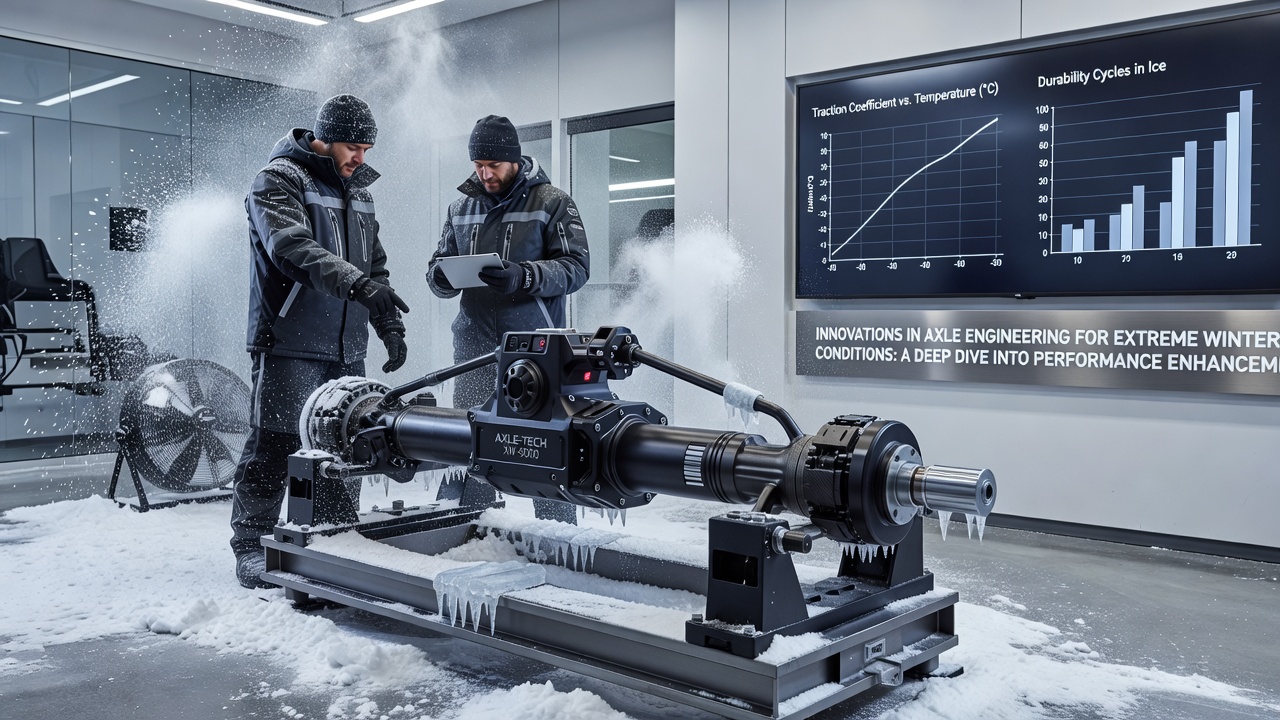
Testing protocols now combine climate chamber simulations with instrumented on-road runs that replicate actual winter freight routes. Data loggers capture torque fluctuations, vibration spectra, and thermal gradients at one-second intervals, generating datasets that feed into machine-learning models for failure prediction. According to reports published by the Society of Automotive Engineers, vehicles equipped with the latest axle iterations completed 12,000 kilometers of mixed winter conditions with zero reported axle-related incidents, whereas control groups using legacy designs experienced three incidents requiring roadside intervention. These figures emerge from coordinated trials involving fleets in both North American and Scandinavian environments, ensuring geographic diversity in the performance data.
Integration With Broader Vehicle Systems
Axle innovations do not operate in isolation. Electronic control units now receive direct input from axle-mounted temperature and load sensors, allowing dynamic adjustment of traction control parameters and differential locking thresholds. This integration has produced measurable improvements in stopping distances on glare ice, with instrumented tests showing reductions of 1.2 meters from 40 kilometers per hour when compared with non-integrated systems. Researchers note that such gains become particularly relevant for heavy commercial vehicles that must maintain schedules regardless of weather severity.
Outlook Toward September 2026 Standards
Regulatory bodies have scheduled review meetings for September 2026 to evaluate whether new performance benchmarks for cold-weather axle durability should be incorporated into international vehicle certification requirements. Preliminary drafts circulated among industry groups reference the material and design thresholds already demonstrated in recent trials. Should these benchmarks advance, manufacturers anticipate accelerated adoption timelines for the upgraded axle technologies across commercial and emergency response fleets.
Conclusion
Collective progress in metallurgy, structural engineering, and sensor integration has produced axle systems better suited to sustained operation under extreme winter loads. Continued data collection from operational fleets will refine these solutions further, while upcoming regulatory discussions in September 2026 may formalize the performance levels now achievable in controlled and real-world settings.